
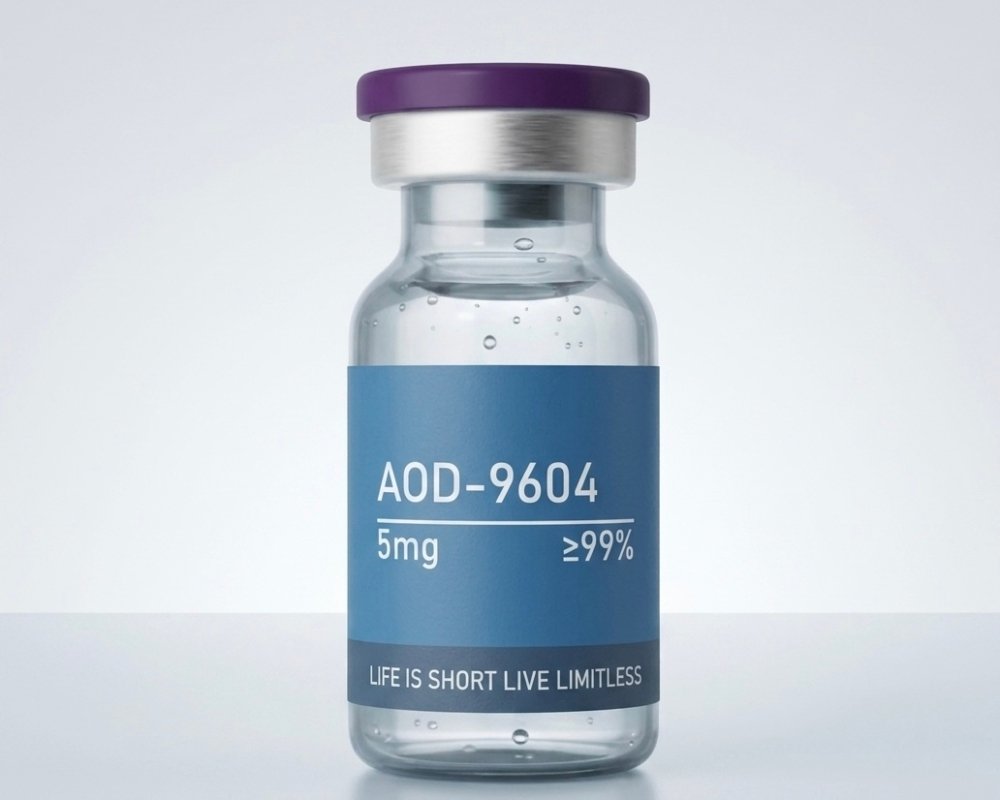
Synthetic C-terminal fragment of hGH (residues 176–191) developed to isolate lipolytic activity without growth-promoting effects. Received GRAS status in the United States in 2014.
AOD-9604 is a synthetic 16-amino-acid peptide fragment corresponding to residues 176–191 of the C-terminus of human growth hormone (hGH), with the addition of an N-terminal tyrosine. It was developed in the 1990s by researchers at Monash University and later commercialized by Metabolic Pharmaceuticals in Australia, who investigated its potential as an anti-obesity therapeutic. The compound was designed to isolate the lipolytic (fat-mobilizing) properties of hGH while excluding the growth-promoting and insulin-resistance effects associated with the full hormone. AOD-9604 advanced through Phase II clinical trials for obesity in the mid-2000s, and while it did not achieve marketing approval as a weight-loss therapeutic, it received Generally Recognized as Safe (GRAS) status in the United States in 2014 and has remained a compound of scientific interest in metabolic research.
Each vial contains 5 mg of AOD-9604 supplied as a lyophilized white powder at ≥99% purity, with 10 vials per package. The compound must be reconstituted in bacteriostatic or sterile water prior to use in any laboratory protocol. AOD-9604 is supplied for controlled research environments where consistent dosing of a stable hGH-fragment analogue is required.
| Internal SKU | 100241 |
|---|---|
| Strength | 5 mg per vial |
| Package | 10 vials per box |
| Form | Lyophilized white powder |
| Purity | ≥99% |
| CAS Number | 221231-10-3 |
| Molecular Formula | C78H123N23O23S2 |
| Molecular Weight | 1815.07 g/mol |
| Amino Acid Sequence | H-Tyr-Leu-Arg-Ile-Val-Gln-Cys-Arg-Ser-Val-Glu-Gly-Ser-Cys-Gly-Phe-OH (disulfide bridge between Cys7 and Cys14) |
| Storage | Store lyophilized powder at -20°C; reconstituted solution at 2–8°C. Protect from light. |
All orders ship via cold-chain logistics at 2–8°C with ice packs and insulated packaging. Orders placed before 2 PM CT ship the same day. Free standard shipping on orders over $150.
This product is for research use only. Not intended for human or veterinary therapeutic use. Must be handled by qualified researchers in compliance with all applicable regulations. Not for resale.