
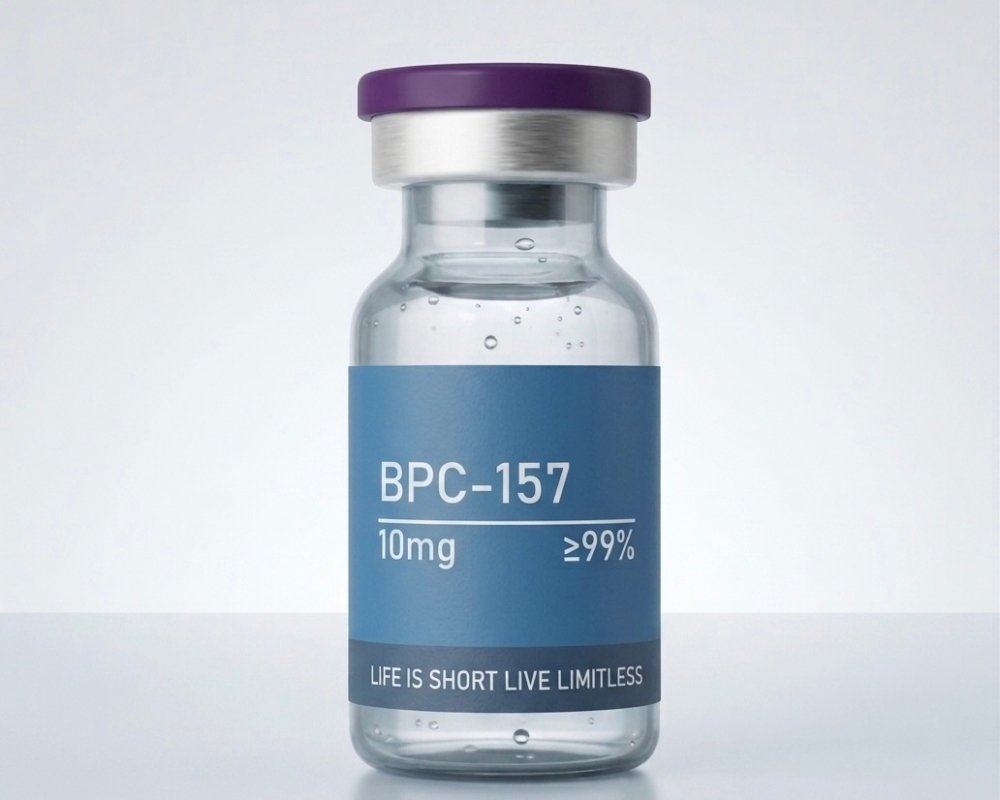
Synthetic pentadecapeptide derived from a partial sequence of a protective protein found in human gastric juice. Over 100 preclinical studies published by the University of Zagreb research group.
BPC-157 (Body Protection Compound-157) is a synthetic pentadecapeptide consisting of 15 amino acids derived from a partial sequence of a protective protein originally identified in human gastric juice. It was first characterized in the early 1990s by Dr. Predrag Sikirić and colleagues at the University of Zagreb in Croatia, who have published over 100 preclinical studies investigating the compound. Unlike many peptides, BPC-157 has demonstrated stability in gastric acid in laboratory conditions, which has made it a compound of interest for gastrointestinal and systemic research. Investigations have explored its effects on a variety of tissue systems including muscle, tendon, ligament, bone, vascular endothelium, and the nervous system in rodent models.
Each vial contains 10 mg of BPC-157 supplied as a lyophilized white powder at ≥99% purity, with 10 vials per package. The 10mg vial format is the standard size for most laboratory research protocols and is intended for reconstitution with bacteriostatic or sterile water prior to any in vitro or preclinical application.
| Internal SKU | 100242 |
|---|---|
| Strength | 10 mg per vial |
| Package | 10 vials per box |
| Form | Lyophilized white powder |
| Purity | ≥99% |
| CAS Number | 137525-51-0 |
| Molecular Formula | C62H98N16O22 |
| Molecular Weight | 1419.53 g/mol |
| Amino Acid Sequence | Gly-Glu-Pro-Pro-Pro-Gly-Lys-Pro-Ala-Asp-Asp-Ala-Gly-Leu-Val (pentadecapeptide, 15 amino acids) |
| Storage | Store lyophilized powder at -20°C; reconstituted solution at 2–8°C. Protect from light. |
All orders ship via cold-chain logistics at 2–8°C with ice packs and insulated packaging. Orders placed before 2 PM CT ship the same day. Free standard shipping on orders over $150.
This product is for research use only. Not intended for human or veterinary therapeutic use. Must be handled by qualified researchers in compliance with all applicable regulations. Not for resale.